Michael Kirsch, in his article defending citizenship-based taxation, talks about how easier it is for American emigrants to maintain ties to the homeland in the age of the Internet. I have seen the same argument in many different places, applied to many of the world's diasporas. Email, Skype, message boards and the like are all means that migrants use to keep in touch with family and to stay abreast of major events in the homeland.
In my email in-box this morning I received yet another solicitation from the New York Times. Yet another "special offer" enticing me to subscribe for a very modest fee. Since the New York Times is, to a very great extent, one of the United States' few truly national newspapers, it might seem a no-brainer for an American migrant like myself to leap at the chance to stay up to date with what's going on "over there."
And yet, it really holds no appeal for me and I have to ask myself why that is. Some of it is surely information overload. There are only so many hours in a day and much to do: gardening, going to the parish, going into Paris, going to the clinic, cooking, cleaning, quilting and, yes, reading books, email and on-line articles and writing.
But far more of it is probably related to my level of integration in my host country and the relevance of American events to my daily life. Over the years what is happening here became much more interesting and useful to me personally then what was going on over there. Reading about the fight over the "ecotax" here is not only of interest to me, it's something of interest to the people I meet every day. It's news that not only sparks conversations but allows me to participate in ongoing ones.
Reading the New York Times just doesn't help me connect in my day to day social circle, and it's not just a matter of the topics which are very centered on the US but also a question of language. Most of my friends here in Versailles either don't speak English at all or don't care to do so with me. When I step out of my house French rules and it's the language I live in for the most part. Furthermore, if some topic or event of international interest comes up then it will always be picked up by the local national papers like Le Monde and I can read about it there. And then, if I'm really interested, I'll do a google search and see what the American papers are saying.
That's pretty much how it works for me. Let me assure you that it wasn't by design and it didn't happen overnight. It was a slow process that took many years and might change again if there is some pressing reason for me to once again follow the news from the homeland more closely. Right now I am following the debates over citizenship-based taxation and FATCA with great interest but what I read is more likely to come from non-US sources since the American media hasn't been very interested in the story.
What about conversations with friends and family back in the US? Are they a source of news? Honestly, not so much. Most of our emailing back and forth has to do with family matters: health, jobs, gardening, children and the like. Yes, every so often they will share their pleasure (or displeasure) over some issue that has Americans talking (Obamacare, for example, or gay rights) but that's about the extent of it.
So from where I sit the idea that technology has dramatically changed the ability of a migrant to stay in touch with the former home is true and not true. It's true that it is easier to stay in touch with friends and family. I remember the days before skype and email - it was a time of expensive international phone calls and letters (you know the things we used to write on dead trees and mail from the local post office with pretty stamps?) The ability to send a message to my mother and get an answer the same day, made a world of difference. But the ties that are reinforced by this constant messaging are not national ones. They involve a very small group of people in a particular place, the American west coast, and that's about it. Because they are so limited by kinship and geography, I find that they do not serve to reaffirm my ties to the American nation. On the contrary, sometimes I have the sense that, for me, the Pacific Northwest is the only part of the US that really counts with the rest of the country being a great mystery to me. Something that was true, by the way, even before I left the US since I never travelled much around the country when I lived there. I am more at home in Tokyo having lived there for a few years than I was in New York, a place I visited for only a few days a few years ago. I've seen more of Shanghai then of Sacramento where my brother lives with my five nieces and nephews.
Based on what I have seen and lived, I would say that the picture of the modern diaspora eager for (and lapping up) news from "home" is not entirely accurate. The homeland news is there to read for anyone with an Internet connection, mail from family and friends is always welcome, and a phone call can make one's day (unless, of course, the caller took no notice whatsoever of the time difference) but to extrapolate from that and claim that these new communication methods fundamentally change the migrant's relationship to the home nation-state, that it is a factor (I've seen this assertion) in the non-integration of migrants in the host countries, and that one can now assume that all migrants everywhere are aware of the smallest details gripping the national consciousness on any particular day is a real stretch. I genuinely don't think it works quite that way.
Your thoughts?
Tuesday, November 12, 2013


Monday, November 11, 2013
Defending Citizenship-Based Taxation
The U.S. practice of citizenship-based taxation has been condemned by many and there are proposals out there as I write this to change the system to one based on residency. Nearly unique in the world, the U.S. is one of only two countries that uses citizenship (or semi-citizenship in the case of Green Card holders) as a basis for taxation. This mean that an American citizenship is subject to U.S. tax and reporting requirements regardless of where he or she lives in the world even if her income and assets were not earned in and have no connection to the U.S..
Most Americans abroad, in my experience, are "accidental migrants". They left the U.S. for one reason or another and then a certain number of them stayed on and chose to build a life in another country or even in many countries. Nothing particularly nefarious about any of it and, frankly, taxes were the last thing on their minds when they bought that plane ticket or when they landed that job after graduation.
With that in mind, let's turn to a defense of citizenship-based taxation which was recently published by Michael Kirsch of Notre Dame Law School.
It was a good read, a nicely written document with clear arguments. Kirsch springs to the defense of citizenship-based taxation on these grounds:
Membership: American citizens abroad retain ties to the United States and are still considered part of the nation. Moreover these connections matter because:
This is a very compelling argument. Yes, there are ties and they are meaningful for many of us. Does it follow that these emotional ties to the homeland should translate into some sort of personal sacrifice in the name of national solidarity? Maybe. Where this argument breaks down for me is the rhetoric coming out of the homeland, from both politicians and the general public, that paints American citizens abroad as traitorous Benedict Arnold's, tax evaders until proven otherwise, and folks who should lose their U.S. citizenship following marriage to a foreigner, naturalizing in another state or residing long-term in another country.
There is strong evidence that Americans in the homeland do not consider Americans abroad to be entirely a part of the American nation. This is reinforced by the American political system which (unlike some other democratic nation-states) does not permit direct representation in the homeland parliament. The fact that it has been almost impossible for American abroad to have any voice whatsoever in decisions made in the home country that directly affect them, and that even very modest proposals to at least study these matters have fallen on deaf ears, are strong signals that the United States does not consider Americans abroad to be full citizens and members in good standing of the American political community.
For Kirsch's argument to have any plausibility whatsoever, the rhetoric must change and clear unambiguous signals sent to the American communities abroad that they are valued members of the nation. Since that has not happened, an appeal to solidarity simply will not work. Instead there is a sense that American abroad may love the homeland, but the homeland does not return that sentiment and is simply using FATCA and citizenship-based taxation to extract resources in order to punish Americans who leave the country.
Future emigration: Kirsch's second argument in favor of citizenship-based taxation is a projection into the future. He concedes that while today's American emigrants may not be motivated to move abroad for tax reasons, a switch from citizenship-based to residency-based taxation would provide incentives for many more Americans to leave the U.S. He is not just referring to potential loss of the idle rich:
Most Americans abroad, in my experience, are "accidental migrants". They left the U.S. for one reason or another and then a certain number of them stayed on and chose to build a life in another country or even in many countries. Nothing particularly nefarious about any of it and, frankly, taxes were the last thing on their minds when they bought that plane ticket or when they landed that job after graduation.
With that in mind, let's turn to a defense of citizenship-based taxation which was recently published by Michael Kirsch of Notre Dame Law School.
It was a good read, a nicely written document with clear arguments. Kirsch springs to the defense of citizenship-based taxation on these grounds:
Membership: American citizens abroad retain ties to the United States and are still considered part of the nation. Moreover these connections matter because:
"Whereas a citizen living abroad in the early 20th century might have gone years without having meaningful connections with U.S. society or contact with persons living in the United States, the growth of the Internet has enabled citizens abroad to stay up-to-date with national and local news in the United States, and to communicate with family and friends in the United States via Skype video calls, text messages, email and other forms of instantaneous communication, thereby strengthening potential ties to U.S. society."Therefore, where a duty of citizenship is to support the community, and where it can be shown that one's membership and connections to that community are still active, it is reasonable, he says, to expect everyone, including the population living abroad, to support the homeland community in some way even if they derive no direct benefit from the taxes they pay.
This is a very compelling argument. Yes, there are ties and they are meaningful for many of us. Does it follow that these emotional ties to the homeland should translate into some sort of personal sacrifice in the name of national solidarity? Maybe. Where this argument breaks down for me is the rhetoric coming out of the homeland, from both politicians and the general public, that paints American citizens abroad as traitorous Benedict Arnold's, tax evaders until proven otherwise, and folks who should lose their U.S. citizenship following marriage to a foreigner, naturalizing in another state or residing long-term in another country.
There is strong evidence that Americans in the homeland do not consider Americans abroad to be entirely a part of the American nation. This is reinforced by the American political system which (unlike some other democratic nation-states) does not permit direct representation in the homeland parliament. The fact that it has been almost impossible for American abroad to have any voice whatsoever in decisions made in the home country that directly affect them, and that even very modest proposals to at least study these matters have fallen on deaf ears, are strong signals that the United States does not consider Americans abroad to be full citizens and members in good standing of the American political community.
For Kirsch's argument to have any plausibility whatsoever, the rhetoric must change and clear unambiguous signals sent to the American communities abroad that they are valued members of the nation. Since that has not happened, an appeal to solidarity simply will not work. Instead there is a sense that American abroad may love the homeland, but the homeland does not return that sentiment and is simply using FATCA and citizenship-based taxation to extract resources in order to punish Americans who leave the country.
Future emigration: Kirsch's second argument in favor of citizenship-based taxation is a projection into the future. He concedes that while today's American emigrants may not be motivated to move abroad for tax reasons, a switch from citizenship-based to residency-based taxation would provide incentives for many more Americans to leave the U.S. He is not just referring to potential loss of the idle rich:
"However, for citizens who are retired (or otherwise derive most of their income from investments), or for those whose profession provides geographic flexibility, the prospect of moving abroad to save significant amounts of income or estate taxes would be inviting."So he's talking about the international retirement migrants, the IT workers, the English teachers, the itinerant "creatives" and other working people who might be encouraged to move to low-tax jurisdictions if they were no longer subject to U.S. worldwide tax and reporting requirements.
Where I think this argument breaks down is in the communication gap that I've already discussed in another post. The vast majority of lower and middle-income Americans went abroad (and go abroad even today) assuming that the United States has a residency-based tax system like the other 99% of countries in the world. It has come as a great surprise to them to learn that the U.S. has a citizenship-based taxation system that applies to them. Furthermore, most Americans in the homeland are completely unaware of how the United States' tax system applies to Americans living outside the United States and are flabbergasted when you explain it to them. I can attest personally to the fact that newly arrived Americans abroad in France are still quite likely to have never heard of an FBAR, much less be aware that they must file 1040's on their French income.
It is a fact that Americans have been going abroad for years with the assumption that filing and paying taxes in the host country was sufficient to meet their obligations. Has this led to mass emigration on the part of America's middle class? Clearly not.
So moving from a citizenship-based tax system to one based on residency would simply be de jure recognition of the de facto situation. Let me repeat: the American tax system has been citizenship-based in principle but residency-based in practice for years. As a practical matter it has been almost impossible to enforce citizenship-based taxation and for the most part the American government never really tried to do so until recently. He is correct to say that awareness is growing but no one has any hard evidence to demonstrate that a significant number of US citizens and Green Card holders abroad (not to mention immigrants in the U.S.) do understand their obligations and there has been no effort whatsoever on the part of the U.S. government to spread the word. Americans abroad are still primarily getting their information via word of mouth and the occasional article or blog post - not the most efficient or effective method to raise awareness and encourage compliance.
What Kirsch misses, I think, is just how revolutionary these efforts to enforce citizenship-based taxation have been. Without warning the US government simply, without any research or studies, changed their policy to enforce these little known laws without making the slightest effort to determine why Americans abroad were mostly non-compliant in the first place. The assumption they made (and Kirsch implies it as well) is that their non-compliance was intentional and an effort to "escape America". Having committed one terrible act (that of leaving in the first place) it is not a stretch for homelanders to assume that this population is continuing their dark deeds abroad. In any case, with such limited representation in the homeland, Americans abroad have few avenues for protest and so can safely be ignored.
Since no attempt was ever made to determine the feasibility of the effort and just how much revenue could be gained versus the costs of administrating an extra-territorial system in 190+ countries around the world, there is no evidence whatsoever that the enforcement of citizenship-based taxation and FATCA will benefit the homeland. Is it possible that the cost will far exceed revenue gained? Yes, but since these kinds of questions are never raised, and America (lawmakers, bureaucrats and homeland citizens alike) seem to prefer a state of ignorance, the only conclusion I can come to is that these efforts are mostly designed to punish those who went abroad in the first place and to actively discourage those Americans who might be thinking about it.
Which, in the end, takes this entire discussion for and against CBT out of the realm of "tax evasion" and into the world of "emigrant control." It is nothing less than an attempt to make Americans of all classes, income levels, and professions less globally mobile. I find it telling that Kirsch inadvertently lets this slip - the usual framework (and the way of selling FATCA and CBT to the homeland public) is to frame it as catching the rich who are evading their responsibilities. His mention of the international retirement migrants says it all - American on Social Security or military pensions who wish to live in Mexico, Thailand or any other place where the cost of living (and taxes) is low but the standard of living is high, should be "incentivized" to change their minds and come home to spend that money. As for the IT workers, nurses, teachers, professors, musicians, writers and journalists, their production should remain in the U.S. where it and they belong and they should be discouraged at all costs from going out into the world and being at home in it.
It is deeply ironic that, having been one of the nations behind globalization, the United States has decided that its own citizens (via the tax system) should be actively discouraged from taking advantage of all that this new era has to offer. It is my firm conviction that FATCA and broad enforcement of citizenship-based taxation will come back to haunt America. As it stands, American citizenship is (with only one exception) the only citizenship that comes with this sort of bureaucratic ball and chain, thus making it a citizenship wholly incompatible with international mobility.
In a globalized world this is a counter-productive "exceptionalism" that will do nothing more than incentivize the curious, the ambitious, the entrepreneurial and the highly qualified to cast off that citizenship in favor of one (and there are many) that is more compatible with their aspirations. For lower to middle-class Americans this will hit them hardest of all and make shedding their U.S. passports the only way to achieve their ambitions of becoming full participants with an equal chance in a globalized world.
Sunday, November 10, 2013
Talking FATCA with The Stateless Man
I had the extraordinary pleasure today to spend some time talking with Fergus Hodgson of The Stateless Man on his weekly radio show. I was just thrilled to do radio - a medium that I was raised to love and still think is far superior to television. And I had a great time with this gentleman who is funny, smart as a whip and knows how to show a lady exile a good time.
On the same show was someone familiar to many of you who follow FATCA and the growing number of American citizens renouncing citizenship, Daniel Kuttel.
Fergus was kind enough to pass along recordings of both interviews. As a bonus in between me and Dani is an interview with Lois Lowry, author of The Giver. I wasn't familiar with her work but I enjoyed the interview so much that the book went straight on my Goodread to-read list.
You can find everything (all two hours) here in mp3 format. Enjoy.
On the same show was someone familiar to many of you who follow FATCA and the growing number of American citizens renouncing citizenship, Daniel Kuttel.
Fergus was kind enough to pass along recordings of both interviews. As a bonus in between me and Dani is an interview with Lois Lowry, author of The Giver. I wasn't familiar with her work but I enjoyed the interview so much that the book went straight on my Goodread to-read list.
You can find everything (all two hours) here in mp3 format. Enjoy.
Saturday, November 9, 2013
Harvest Time in Oregon
Speaking of kin, back in the Old Country my parents recently assembled a crew for the annual walnut harvest at the family farm in the Willamette Valley in Oregon.
I always miss it because our visits to the States tend to be in the summer and the harvest is well after la rentrée when we are already back home safe and sound. Mom usually passes along a few pictures so we can vicariously experience the event but this year one of their friends went one step further and did a post for her blog Pacific Northwest Seasons. Great pictures and a fine description of the process which, yes, does involve sleeping in a tent, hard work, and getting down on one's hands and knees but also includes good cheer, fine wine, and tasty food. I cannot recommend enough the Silver Grille.
Here's the post: Down on the Farm: Willamette Valley Walnut Harvest
And here's one picture to add of a past harvest that I found recently in my archives. This is the patriarch Ben Jr. (Benjamin's father known to me and the Frenchlings as Grandpa Ben) at the farm. I recognize the handwriting on the back of the photo - it was taken by Grandma Benona (Ben Jr.'s wife) and she wrote, "Bringing in the last of the corn at the farm, 1984."

I always miss it because our visits to the States tend to be in the summer and the harvest is well after la rentrée when we are already back home safe and sound. Mom usually passes along a few pictures so we can vicariously experience the event but this year one of their friends went one step further and did a post for her blog Pacific Northwest Seasons. Great pictures and a fine description of the process which, yes, does involve sleeping in a tent, hard work, and getting down on one's hands and knees but also includes good cheer, fine wine, and tasty food. I cannot recommend enough the Silver Grille.
Here's the post: Down on the Farm: Willamette Valley Walnut Harvest
And here's one picture to add of a past harvest that I found recently in my archives. This is the patriarch Ben Jr. (Benjamin's father known to me and the Frenchlings as Grandpa Ben) at the farm. I recognize the handwriting on the back of the photo - it was taken by Grandma Benona (Ben Jr.'s wife) and she wrote, "Bringing in the last of the corn at the farm, 1984."

And here's what happens to all those walnuts after harvest: 2011 Harvest.
Friday, November 8, 2013
Culture and Kin
Both Ellen and Arun left notes that Susan Ossman, author of Moving Matters (the book I talked about two days ago) will be speaking at the American Library in Paris next week. Health permitting I'll try to be there. November 13 is the date and the event starts at 19:30.
I also note on the American Library website that one of my top reads this year, Logevall's Embers of War: The Fall of an Empire and the Making of America's Vietnam, was nominated for The American Library in Paris Book Award. May I say that I really hope he wins. This is an extraordinary book that I reviewed back in July.
On to another great read. This one definitely lends itself to Slow Thinking. It's called War in Human Civilization by Azar Gat. Daunting to write, I would think, since this topic is huge. Have to admire however, his ambition, and truth be told, he stole my heart in the first few pages when he said, " Most of all this book is an invitation to participate in an intellectual adventure. Reading for and writing it were done with a consuming interest and were a source of immense pleasure for me. Hopefully, this will filter through to the reader."
It does. He begins the book with the State of Nature (the human one) and examines the evidence for and against different views of human nature. Are we naturally warlike and aggressive animals or is this something we picked up along the evolutionary trail while we were out there hunting and gathering or sowing seeds? He arrives at his answer (it's both he says) through a very meticulous step by step review of the biological, anthropological and archaeological evidence. You don't have to agree with his conclusion to admire the method or his ability to write with such clarity and to keep this reader interested along the way. Call me the quintessential general reader - I possess no advanced degrees and have no pretensions to being any sort of intellectual - and so far I'm really liking this book and learning a great deal.
One idea that definitely tickled my interest was when he talked about kinship - that biological tie that drives both cooperation and competition. The more genes we share with another, it is said, the less likely we are to commit violence against each other. Unless, of course, there is some reason for rivalry and conflict that overrides this. Anyone who has ever seen a French inheritance fight between siblings knows exactly when competing interests trumps family. Still, Gat says, the Arab proverb, "Me against my brothers, me and my brothers against my cousins, me and my brother and my cousins against the world," has been shared by many peoples. Kin counts.
But how do we know for sure who is and who isn't kin? There is basic biology and today we have DNA tests that can confirm this with a much higher level of certainty than in times past. But even when these things didn't exist, kin didn't necessarily mean that one actually shared genes. Adoption has certainly been one way to make someone kin. Marriage is another - the mother of your cousins is family. The pattern of a woman leaving her original family and being absorbed by a new tribe or clan is a very ancient one, and one that still seems to exist. The "foreign bride" is a concept we all know (and generally speaking, we often take this pattern for granted ) while "foreign groom" is a bit odd. A little residual sexism there or just genuine surprise that an old pattern is being changed by modern ways?
Gat argues that there is another factor at work here when we examine who is and is not kin - who is an isn't worthy of being called "family": culture.
What he's saying is that there is a rational basis for ethnocentrism. Since kinship is a factor in determining how we orient our aggression and how we choose to cooperate with others, it has been vital in the history of Homo sapiens sapiens that we be able to separate "us" from "them" - the former being natural allies or ones we assume will be more willing to sacrifice for us or for a common project.
Which is exactly what happens to migrants. A migrant goes from one imagined world to another and learns on the way just how weird it all is. In some ways we become cultural relativists in spite of ourselves. We detach and re-attach and the world we left and the world we choose have to come to some sort of equilibrium in our heads. The home culture and the culture of arrival can not be the last word ever again and we know this in our bones.
Being social creatures, we cannot live among a people and forever think of them as "strangers." It may take a few years but what usually happens is that we come to view ourselves as "one of them." Depending on the receiving country/culture, this is more or less reciprocated over time as we signal our willingness to adopt the culture and become kin. In my own experience, what I find fascinating is how my marriage to a native seems to be for so many of the people I know here in my adopted country, the signal that makes me part of the family and that was true even before the long process of integration bore fruit. I'm kin even though I'm not a citizen and may I say it's a very odd place to be.
But what is completely lost in the migration journey (provided we integrate to a certain extent) is that certainty the homelanders generally have that they are living in the best of all possible worlds, surrounded by people who are, however distant they may be genetically or geographically, family. For a migrant "family" has expanded to include an entirely new group and the question for every migrant is how to balance those loyalties and the very strong emotions that arise because of that sense of connection. Clearly, the interests of each family are different and yet membership in both creates a third interest which is, whenever possible, a real desire, a deep psychological need, for both to get along. Duals (and by this I mean any bi-national or bi-cultural individual) do not want conflict between the two cultural/political/lingual groups - it is never EVER in their interests.
In this, do we see a force for peace between "imagined communities"? Gat talks about "people swapping" as a real factor in favor of it within a tribal or clan system. With international migration growing is this group 214 million strong, a means of reducing competition and conflict between nations? I don't know. Maybe and it's something to ponder.
What I do know is that every migrant who has come to the realization that his world is only one world among many equally fine worlds, who is a living breathing bridge between one or many (and here Ossman's serial migrants may be doing more good than they know), can choose to play a role in extending that feeling of kinship among all peoples. That, I think, would be a very fine way to be a "global citizen."
"If a man be gracious and courteous to strangers, it shows he is a citizen of the world, and that his heart is no island cut off from other lands, but a continent that joins to them."
I also note on the American Library website that one of my top reads this year, Logevall's Embers of War: The Fall of an Empire and the Making of America's Vietnam, was nominated for The American Library in Paris Book Award. May I say that I really hope he wins. This is an extraordinary book that I reviewed back in July.
On to another great read. This one definitely lends itself to Slow Thinking. It's called War in Human Civilization by Azar Gat. Daunting to write, I would think, since this topic is huge. Have to admire however, his ambition, and truth be told, he stole my heart in the first few pages when he said, " Most of all this book is an invitation to participate in an intellectual adventure. Reading for and writing it were done with a consuming interest and were a source of immense pleasure for me. Hopefully, this will filter through to the reader."
It does. He begins the book with the State of Nature (the human one) and examines the evidence for and against different views of human nature. Are we naturally warlike and aggressive animals or is this something we picked up along the evolutionary trail while we were out there hunting and gathering or sowing seeds? He arrives at his answer (it's both he says) through a very meticulous step by step review of the biological, anthropological and archaeological evidence. You don't have to agree with his conclusion to admire the method or his ability to write with such clarity and to keep this reader interested along the way. Call me the quintessential general reader - I possess no advanced degrees and have no pretensions to being any sort of intellectual - and so far I'm really liking this book and learning a great deal.
One idea that definitely tickled my interest was when he talked about kinship - that biological tie that drives both cooperation and competition. The more genes we share with another, it is said, the less likely we are to commit violence against each other. Unless, of course, there is some reason for rivalry and conflict that overrides this. Anyone who has ever seen a French inheritance fight between siblings knows exactly when competing interests trumps family. Still, Gat says, the Arab proverb, "Me against my brothers, me and my brothers against my cousins, me and my brother and my cousins against the world," has been shared by many peoples. Kin counts.
But how do we know for sure who is and who isn't kin? There is basic biology and today we have DNA tests that can confirm this with a much higher level of certainty than in times past. But even when these things didn't exist, kin didn't necessarily mean that one actually shared genes. Adoption has certainly been one way to make someone kin. Marriage is another - the mother of your cousins is family. The pattern of a woman leaving her original family and being absorbed by a new tribe or clan is a very ancient one, and one that still seems to exist. The "foreign bride" is a concept we all know (and generally speaking, we often take this pattern for granted ) while "foreign groom" is a bit odd. A little residual sexism there or just genuine surprise that an old pattern is being changed by modern ways?
Gat argues that there is another factor at work here when we examine who is and is not kin - who is an isn't worthy of being called "family": culture.
"As cultures, particularly among hunter-gatherers, was local and thus strongly correlated with kinship, cultural identity became a strong predictor of kinship."It follows from this that the farther a culture or language spreads, the larger the group of people we consider to be close to us. These are the people we would sacrifice for, the folks we may fight with from time to time, but given an external threat, these are the people we would fight with and for.
What he's saying is that there is a rational basis for ethnocentrism. Since kinship is a factor in determining how we orient our aggression and how we choose to cooperate with others, it has been vital in the history of Homo sapiens sapiens that we be able to separate "us" from "them" - the former being natural allies or ones we assume will be more willing to sacrifice for us or for a common project.
"In the hunter-gatherer regional group of around 500, shared culture was a distinctive mark of kinship, as well as a strong basis for social co-operation. This is the deeply engrained evolutionary root of enthnocentrism, xenophobia, patriotism and nationalism... One's people or nation - an extension of the original genetic cum cultural regional group - can evoke the greatest devotion, indeed, fraternity with a motherland or fatherland (the words are revealing), no matter how genetically related its members actually are (a feature that varies among modern peoples, albeit with surprising genes-culture congruity)."Interesting argument, elegantly laid out and eloquently written. Is it true? On some level, I think it is. Benedict Anderson's imagined communities are based on this. This, quite frankly, illogical sense of comradeship (kinship?) that we feel toward other members of our nation-state. There is something that compels us to treat them a bit (or even a lot) differently than "strangers." We assume, with very little hard evidence, that a New Yorker and a Seattleite, a Parisian or a Toulousain, are somehow bound by a tie that is almost mystical - its a weird combination of political/cultural/lingual ties that translate into a feeling (an emotional response) that isn't terribly logical when you step back and look at it from afar.
Which is exactly what happens to migrants. A migrant goes from one imagined world to another and learns on the way just how weird it all is. In some ways we become cultural relativists in spite of ourselves. We detach and re-attach and the world we left and the world we choose have to come to some sort of equilibrium in our heads. The home culture and the culture of arrival can not be the last word ever again and we know this in our bones.
Being social creatures, we cannot live among a people and forever think of them as "strangers." It may take a few years but what usually happens is that we come to view ourselves as "one of them." Depending on the receiving country/culture, this is more or less reciprocated over time as we signal our willingness to adopt the culture and become kin. In my own experience, what I find fascinating is how my marriage to a native seems to be for so many of the people I know here in my adopted country, the signal that makes me part of the family and that was true even before the long process of integration bore fruit. I'm kin even though I'm not a citizen and may I say it's a very odd place to be.
But what is completely lost in the migration journey (provided we integrate to a certain extent) is that certainty the homelanders generally have that they are living in the best of all possible worlds, surrounded by people who are, however distant they may be genetically or geographically, family. For a migrant "family" has expanded to include an entirely new group and the question for every migrant is how to balance those loyalties and the very strong emotions that arise because of that sense of connection. Clearly, the interests of each family are different and yet membership in both creates a third interest which is, whenever possible, a real desire, a deep psychological need, for both to get along. Duals (and by this I mean any bi-national or bi-cultural individual) do not want conflict between the two cultural/political/lingual groups - it is never EVER in their interests.
In this, do we see a force for peace between "imagined communities"? Gat talks about "people swapping" as a real factor in favor of it within a tribal or clan system. With international migration growing is this group 214 million strong, a means of reducing competition and conflict between nations? I don't know. Maybe and it's something to ponder.
What I do know is that every migrant who has come to the realization that his world is only one world among many equally fine worlds, who is a living breathing bridge between one or many (and here Ossman's serial migrants may be doing more good than they know), can choose to play a role in extending that feeling of kinship among all peoples. That, I think, would be a very fine way to be a "global citizen."
"If a man be gracious and courteous to strangers, it shows he is a citizen of the world, and that his heart is no island cut off from other lands, but a continent that joins to them."
Francis Bacon
Thursday, November 7, 2013
Settling in for the Winter - le Petit Godin
"Age appears to be best in four things; old wood best to burn, old wine to drink, old friends to trust, and old authors to read."
Francis Bacon
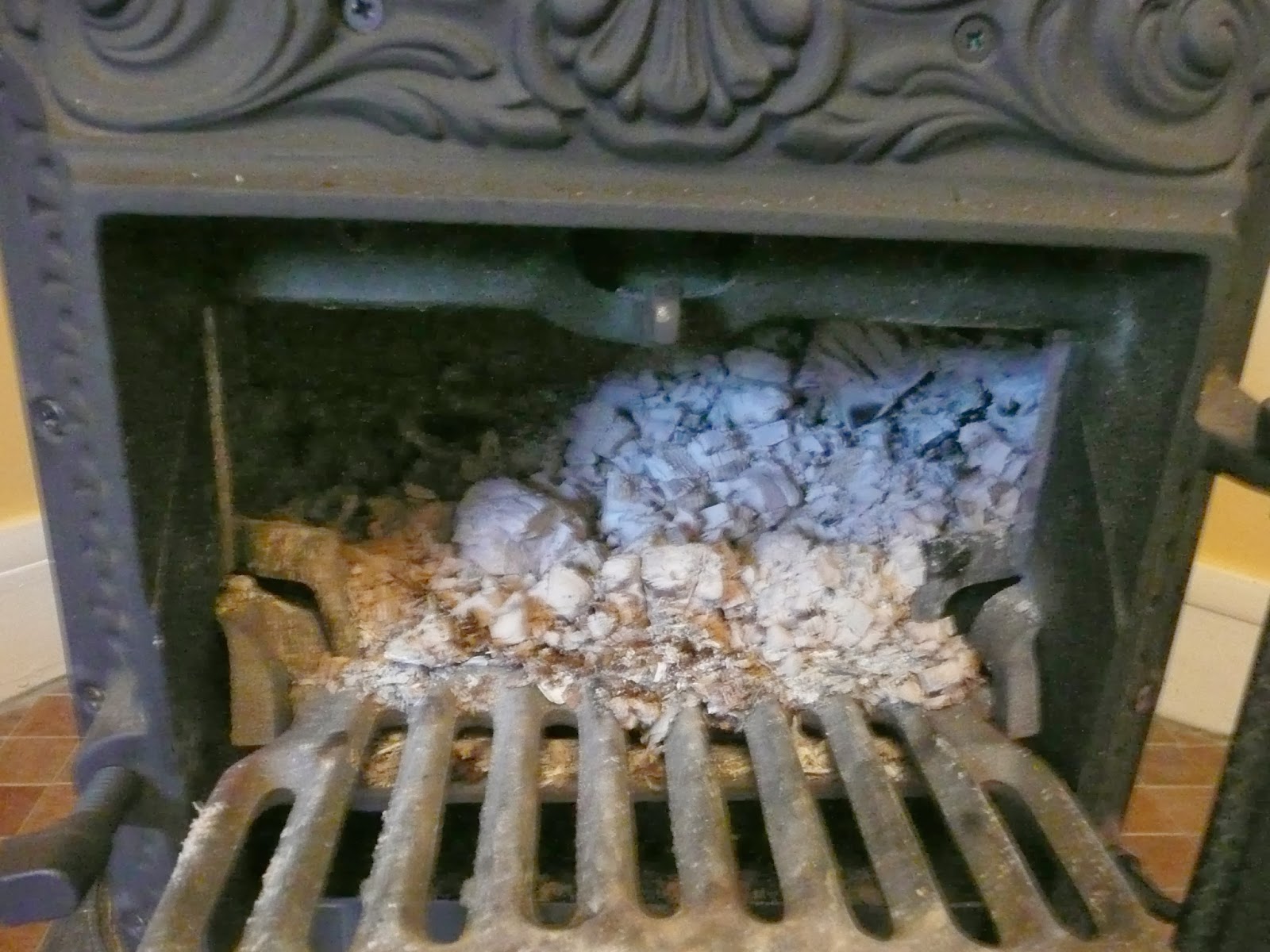
The weather finally turned here in Versailles and with the arrival of the cold and rain we were able to start using our wood stove.
The saga of the Flophouse woodstove - our very own Petit Godin - started a year ago. It was with a sense of triumph that we lit the first fire a few weeks ago. It promptly went out, but with trial and error we finally got it going again and we've had fires almost every night since.
After all that trouble, are we happy with it?
Absolutely. I now understand completely why this woodstove (design from the 19th century) and others like it are still made and sold here.
A quick recap of the context: We have a small house here in Versailles with a main floor that measures 55 square meters (592 square feet). The house was build in 1929, the year of the crise, and originally had small angle fireplaces in the living room, dining room and bedroom. At some point these were replaced by a central heating system with cast iron radiators (the kind I remember in my elementary school). Not a bad system at all - we have a boiler in the basement and a big ancient fuel tank (another thing I recall from my youth). We also put in insulation in the attic and when it snowed last year we were happy to see that the snow was not melting on our roof (a sign that the insulation was doing its job).
But the system runs on heating oil (fioul) which can be pricey, though right now it's not too bad. Minimum order is 1000 liters which means a little less than 1000 euros to have them come by and fill it up. That's a big check to write once or twice a winter and that's to keep the house at an acceptable (but not terribly comfy) 68-69 degrees.
Our Petit Godin has changed all of that. Once I get it going (takes about 15-30 minutes) and have just two logs burning, the temperature on the main floor shoots up to a balmy 23 degrees (73 degree F).
Heaven.
Pretty efficient, too. We go through about 5-6 logs a night. The biggest challenge has been figuring out how to keep the heat constant - regulating the air flow so that it doesn't burn too hot or too fast.
Plus, it's pretty. Watching the flames dance in the little window is very soothing. And there's the smell - a slight whiff of wood smoke that conjures up images of camp fires and stuff like that. It just makes our cozy little house, cozier. I even hauled out my grandmother's cast iron skillet and have been experimenting with cooking on it. So far, it heats water and stew just fine. One of these days I'll try pancakes.
Here are a few pictures.


Francis Bacon
The weather finally turned here in Versailles and with the arrival of the cold and rain we were able to start using our wood stove.
The saga of the Flophouse woodstove - our very own Petit Godin - started a year ago. It was with a sense of triumph that we lit the first fire a few weeks ago. It promptly went out, but with trial and error we finally got it going again and we've had fires almost every night since.
After all that trouble, are we happy with it?
Absolutely. I now understand completely why this woodstove (design from the 19th century) and others like it are still made and sold here.
A quick recap of the context: We have a small house here in Versailles with a main floor that measures 55 square meters (592 square feet). The house was build in 1929, the year of the crise, and originally had small angle fireplaces in the living room, dining room and bedroom. At some point these were replaced by a central heating system with cast iron radiators (the kind I remember in my elementary school). Not a bad system at all - we have a boiler in the basement and a big ancient fuel tank (another thing I recall from my youth). We also put in insulation in the attic and when it snowed last year we were happy to see that the snow was not melting on our roof (a sign that the insulation was doing its job).
But the system runs on heating oil (fioul) which can be pricey, though right now it's not too bad. Minimum order is 1000 liters which means a little less than 1000 euros to have them come by and fill it up. That's a big check to write once or twice a winter and that's to keep the house at an acceptable (but not terribly comfy) 68-69 degrees.
Our Petit Godin has changed all of that. Once I get it going (takes about 15-30 minutes) and have just two logs burning, the temperature on the main floor shoots up to a balmy 23 degrees (73 degree F).
Heaven.
Pretty efficient, too. We go through about 5-6 logs a night. The biggest challenge has been figuring out how to keep the heat constant - regulating the air flow so that it doesn't burn too hot or too fast.
Plus, it's pretty. Watching the flames dance in the little window is very soothing. And there's the smell - a slight whiff of wood smoke that conjures up images of camp fires and stuff like that. It just makes our cozy little house, cozier. I even hauled out my grandmother's cast iron skillet and have been experimenting with cooking on it. So far, it heats water and stew just fine. One of these days I'll try pancakes.
Here are a few pictures.




Wednesday, November 6, 2013
Stepping Beyond the First Migration
For the last week or so I've been hibernating in my little house here in Porchefontaine. My last visit with my oncologist spawned a whole new series of tests. I am once again spending a great deal of time among the toubibs (slang for "doctors"). So far it has proven fruitful. There is indeed a problem, a side-effect of the medication I'm taking, which is cause for concern and will necessitate a change in the treatment. May I say how happy I am to learn that I wasn't imagining things? And thank heavens for the French medical system. It's not just efficient (at all my appointments all I've had to produce is my national healthcare card), it's also one that most of the time delivers caring care. One more appointment at the end of this week and my doctor will have all the information she needs to set us on a new course.
In spite of all this great care it's tiring to be shuttling from one appointment to another. The achiness in my hips which got much worse after the breast cancer march has now evolved into a constant dull throb that makes it a bit unpleasant to walk.
Oh, let me be honest here, it makes any movement a trial. Worse, it makes me grumpy and easily irritated. I think I am very poor company right now and I am deliberately avoiding any controversial topics that might transform me from a mild curmudgeon into a nasty, cantankerous, spiteful woman. Nothing (and I believe this with all my heart) is worth the destruction of one's serenity.
So what does one do when one is stuck on the couch drinking decaf and popping codoliprane? Well, I don't know about you but these are the times I use to read and to think. Turn off the phone, set aside the computer, pour a hot cup of something tasty, make a big fire and settle in with a few good books. And when I get up to put another log on the fire or reheat that cup, I think about what I've read and try to connect it to experience or to other ideas, arguments and assertions that have come my way. I find all this very relaxing. You've heard of Slow Food? Slow Cities? How about Slow Thinking? It's where you start with a Beginner's Mind and crack open something that has nothing whatsoever to do with anything urgent or of the moment. The only thing being exercised here is curiosity. It's not about making oneself a better person or more learned; it's simply enjoying the play of ideas on the page and in one's head.
So what am I toying with right now? Susan Ossman's Moving Matters: Paths of Serial Migration.
A lot of food for thought in this book. Ossman is talking about a particular group of "people who move around": a type of migrant who immigrates once, and not having suffered enough the first round, chooses to migrate again to a Third (or Fourth or Fifth) place. Think about that for a moment. The usual narrative is one where the migrant takes that great leap, casts him or herself on a distant shore, integrates insofar as she can in this new homeland, and then gratefully becomes a citizen of this new and wonderful place that she has learned to love as her own.
The ideal end to this story (if we were writing fairy tales) is a vision of the old immigrant surrounded by her grateful successful native-born children, bouncing her grandchildren on her knee while she tells them stories about growing up in the Old Country in her charming musical accent. (And isn't it ironic that my tales of the "old country" will be of growing up in the exotic lawless world of the Far West of the United States of America?")
Why do we love this story which is a staple of many countries of immigration? Because there is something in it for everyone. The receiving country is reassured on two levels: that it is still some sort of magnet for discontented citizens of other nations and that its culture is still powerful enough to win over the new arrival. As for the migrant it's a beacon of hope - a sign that one day there will be acceptance, prosperity, belonging, provided that one follows the script. It's a model for how we think immigration ought to work.
Ossman points out that immigration is an experience that all migrants share. We can talk about push/pull factors, highly qualified versus low qualified, developed versus developing countries but all migrants are bound by a system that works pretty much the same everywhere. There is the fact of leaving, of being allowed to leave by the home country which issues the passport necessary for travel beyond national borders. And then there is arrival and a system for processing the newcomers whether they are new spouses, college professors, or plumbers. National origin matters much less than one might think. It is, in fact, often a great and terrible surprise to a migrant from a developed country to find himself stuck in line at the prefecture, lumped in with all the other "foreigners". It is humbling (and I should know since I've been humbled in that manner twice in my life). Unless one is so rich (or so terribly important) that one can buy or demand special treatment, prepare to be leveled. The prize, of course, is the residency permit and from there the migrant can move into the new world and start making a life for him or herself.
This is not the only shared experience. Ossman says (and it's true): "The immigrant is perpetually caught between two places; he is defined by a life in between." There will always be a sending country and a receiving country, a home culture and a second culture, the original nation-state citizenship and a second citizenship to add to or to replace the first one. No immigrant can erase where he came from. It's there when he opens his mouth and speaks with an accent. It's there when she orders a birth certificate and place of birth is not here. It's there when something tips off a native that the person before him isn't one and he asks, "So, where are you from?" A life in the new country is always built on the foundations of the old one.
Out of that shared experience come choices that the migrant must make. She has no control over where she is from, the color of her original passport or the process of leaving and arrival. What happens next, however, is..
Some migrants choose to live as perpetual foreigners in the new country and may even even revel in being the exotic beast. Others choose a path that leads to integration and even assimilation - they may give up a great deal in this quest but they also gain much. The ability to successfully navigate a second culture is, like a second language, something that is a passport to a whole new world that one can explore for a lifetime. Some do this and become the old immigrant in the immigrant fairy tale which basically says that "migration is supposed to be a once-in-a-lifetime ordeal, a rite of passage that enables the migrant to occupy a new status as an immigrant." And then, of course, a citizen and lifelong resident.
What Ossman is arguing in her book is that there is yet another option that deserves our attention- one that some migrants find liberating. Forget the host/home country dichotomy, these migrant immigrate (like all other migrants) and then they do something that shatters the standard immigrant tale - they move on.
Ah, you might say, we know these people - the global jet-setters with homes in multiple countries or the executive nomad on a great expatriate package who goes where his company sends him. Ossman says that she's not talking about those folks. Instead the people she talked to seemed to be very much centered in the lower to middle-classes with different levels of education and work experience. But the biggest difference is that these are people who move to to other countries and settle. They just don't settle there forever.
None of this is necessarily by design or part of some grand life strategy. So what happened to make them leave?
Having had a first migration experience, they lost their fear of the process. They know they can pack up, leave everything, start over, and it will be fine. They already know how to learn another culture and language and so it isn't so scary to confront another one. They know what it's like to be a foreigner and they have learned that there are some real advantages to that. But most importantly they have learned that the world offers many alternatives - not just the culture of origin or the culture of arrival in the first country of migration, but a veritable feast of places and people to discover.
Is this simply a rich man's game? From Ossman's experience and my own, the answer is a definite "no". Wealth facilitates this movement but is not essential to it. I suspect that the most important facilitator of serial migration is one's profession. Is there something the migrant is qualified for and can do just about anywhere? Some examples are: IT workers, writers, journalists, carpenters, teachers, musicians. Interestingly enough, some of the most highly paid professions are not necessarily the best ones to have in this context. Doctors and lawyers, for example, since re-certification is often required in order to be able to practice in the new country. Or politicians and lobbyists whose knowledge and status are not transferable to a completely different political landscape.
If as Ossman says, "the ideal immigrant is one who disappears by being integrated into the social fabric over time," then serial migrants are a problem. They disappear alright but in a way that leaves the natives wondering what the hell happened. I sense a lot of resentment around this that I believe comes from a shattering of expectations about what immigrants are supposed to do: be grateful for the welcome, integrate, become productive members of society, and, above all, stay. When I hear a certain moral outrage over those who come and then leave I have to concede, that from a certain perspective, they have a point. Is a country, a culture, and a people simply an interval, a pleasant interlude, in someone's life experience? Fodder for conversations in yet another place that one begins by saying, "When I was living in Berlin..." There is even money to be made chronicling one's time among the natives learning their quaint and exotic customs.
Sounds terrible, doesn't it? And one can see where the sentiment that natives have of being used comes from. But what I have gleaned so far from Ossman's book and the various portraits she paints of different serial migrants, is that discontent or unhappiness with the host country is not the main motivation for moving on. More than anything it's about curiosity, a desire to explore what yet another place has to offer, and not a statement that a particular place is lacking in some way.
Frankly, those who would be hurt the most by the actions of the serial migrants are those who want to believe that their world, out of all the worlds on this planet, is the very best one - the most free or the one with the best social safety net or the most democratic political system or has the most equal treatment of men and women. If that is what the people in a particular country really believe (or want to believe) then, yes, anyone who leaves (native or migrant) has committed a nefarious act and torn a small but noticeable hole in the national myth.
But it's just not true, mes amis. There is no best place. Just different places with different charms and challenges.
In spite of all this great care it's tiring to be shuttling from one appointment to another. The achiness in my hips which got much worse after the breast cancer march has now evolved into a constant dull throb that makes it a bit unpleasant to walk.
Oh, let me be honest here, it makes any movement a trial. Worse, it makes me grumpy and easily irritated. I think I am very poor company right now and I am deliberately avoiding any controversial topics that might transform me from a mild curmudgeon into a nasty, cantankerous, spiteful woman. Nothing (and I believe this with all my heart) is worth the destruction of one's serenity.
So what does one do when one is stuck on the couch drinking decaf and popping codoliprane? Well, I don't know about you but these are the times I use to read and to think. Turn off the phone, set aside the computer, pour a hot cup of something tasty, make a big fire and settle in with a few good books. And when I get up to put another log on the fire or reheat that cup, I think about what I've read and try to connect it to experience or to other ideas, arguments and assertions that have come my way. I find all this very relaxing. You've heard of Slow Food? Slow Cities? How about Slow Thinking? It's where you start with a Beginner's Mind and crack open something that has nothing whatsoever to do with anything urgent or of the moment. The only thing being exercised here is curiosity. It's not about making oneself a better person or more learned; it's simply enjoying the play of ideas on the page and in one's head.
So what am I toying with right now? Susan Ossman's Moving Matters: Paths of Serial Migration.
A lot of food for thought in this book. Ossman is talking about a particular group of "people who move around": a type of migrant who immigrates once, and not having suffered enough the first round, chooses to migrate again to a Third (or Fourth or Fifth) place. Think about that for a moment. The usual narrative is one where the migrant takes that great leap, casts him or herself on a distant shore, integrates insofar as she can in this new homeland, and then gratefully becomes a citizen of this new and wonderful place that she has learned to love as her own.
The ideal end to this story (if we were writing fairy tales) is a vision of the old immigrant surrounded by her grateful successful native-born children, bouncing her grandchildren on her knee while she tells them stories about growing up in the Old Country in her charming musical accent. (And isn't it ironic that my tales of the "old country" will be of growing up in the exotic lawless world of the Far West of the United States of America?")
Why do we love this story which is a staple of many countries of immigration? Because there is something in it for everyone. The receiving country is reassured on two levels: that it is still some sort of magnet for discontented citizens of other nations and that its culture is still powerful enough to win over the new arrival. As for the migrant it's a beacon of hope - a sign that one day there will be acceptance, prosperity, belonging, provided that one follows the script. It's a model for how we think immigration ought to work.
Ossman points out that immigration is an experience that all migrants share. We can talk about push/pull factors, highly qualified versus low qualified, developed versus developing countries but all migrants are bound by a system that works pretty much the same everywhere. There is the fact of leaving, of being allowed to leave by the home country which issues the passport necessary for travel beyond national borders. And then there is arrival and a system for processing the newcomers whether they are new spouses, college professors, or plumbers. National origin matters much less than one might think. It is, in fact, often a great and terrible surprise to a migrant from a developed country to find himself stuck in line at the prefecture, lumped in with all the other "foreigners". It is humbling (and I should know since I've been humbled in that manner twice in my life). Unless one is so rich (or so terribly important) that one can buy or demand special treatment, prepare to be leveled. The prize, of course, is the residency permit and from there the migrant can move into the new world and start making a life for him or herself.
This is not the only shared experience. Ossman says (and it's true): "The immigrant is perpetually caught between two places; he is defined by a life in between." There will always be a sending country and a receiving country, a home culture and a second culture, the original nation-state citizenship and a second citizenship to add to or to replace the first one. No immigrant can erase where he came from. It's there when he opens his mouth and speaks with an accent. It's there when she orders a birth certificate and place of birth is not here. It's there when something tips off a native that the person before him isn't one and he asks, "So, where are you from?" A life in the new country is always built on the foundations of the old one.
Out of that shared experience come choices that the migrant must make. She has no control over where she is from, the color of her original passport or the process of leaving and arrival. What happens next, however, is..
Some migrants choose to live as perpetual foreigners in the new country and may even even revel in being the exotic beast. Others choose a path that leads to integration and even assimilation - they may give up a great deal in this quest but they also gain much. The ability to successfully navigate a second culture is, like a second language, something that is a passport to a whole new world that one can explore for a lifetime. Some do this and become the old immigrant in the immigrant fairy tale which basically says that "migration is supposed to be a once-in-a-lifetime ordeal, a rite of passage that enables the migrant to occupy a new status as an immigrant." And then, of course, a citizen and lifelong resident.
What Ossman is arguing in her book is that there is yet another option that deserves our attention- one that some migrants find liberating. Forget the host/home country dichotomy, these migrant immigrate (like all other migrants) and then they do something that shatters the standard immigrant tale - they move on.
Ah, you might say, we know these people - the global jet-setters with homes in multiple countries or the executive nomad on a great expatriate package who goes where his company sends him. Ossman says that she's not talking about those folks. Instead the people she talked to seemed to be very much centered in the lower to middle-classes with different levels of education and work experience. But the biggest difference is that these are people who move to to other countries and settle. They just don't settle there forever.
None of this is necessarily by design or part of some grand life strategy. So what happened to make them leave?
Having had a first migration experience, they lost their fear of the process. They know they can pack up, leave everything, start over, and it will be fine. They already know how to learn another culture and language and so it isn't so scary to confront another one. They know what it's like to be a foreigner and they have learned that there are some real advantages to that. But most importantly they have learned that the world offers many alternatives - not just the culture of origin or the culture of arrival in the first country of migration, but a veritable feast of places and people to discover.
Is this simply a rich man's game? From Ossman's experience and my own, the answer is a definite "no". Wealth facilitates this movement but is not essential to it. I suspect that the most important facilitator of serial migration is one's profession. Is there something the migrant is qualified for and can do just about anywhere? Some examples are: IT workers, writers, journalists, carpenters, teachers, musicians. Interestingly enough, some of the most highly paid professions are not necessarily the best ones to have in this context. Doctors and lawyers, for example, since re-certification is often required in order to be able to practice in the new country. Or politicians and lobbyists whose knowledge and status are not transferable to a completely different political landscape.
If as Ossman says, "the ideal immigrant is one who disappears by being integrated into the social fabric over time," then serial migrants are a problem. They disappear alright but in a way that leaves the natives wondering what the hell happened. I sense a lot of resentment around this that I believe comes from a shattering of expectations about what immigrants are supposed to do: be grateful for the welcome, integrate, become productive members of society, and, above all, stay. When I hear a certain moral outrage over those who come and then leave I have to concede, that from a certain perspective, they have a point. Is a country, a culture, and a people simply an interval, a pleasant interlude, in someone's life experience? Fodder for conversations in yet another place that one begins by saying, "When I was living in Berlin..." There is even money to be made chronicling one's time among the natives learning their quaint and exotic customs.
Sounds terrible, doesn't it? And one can see where the sentiment that natives have of being used comes from. But what I have gleaned so far from Ossman's book and the various portraits she paints of different serial migrants, is that discontent or unhappiness with the host country is not the main motivation for moving on. More than anything it's about curiosity, a desire to explore what yet another place has to offer, and not a statement that a particular place is lacking in some way.
Frankly, those who would be hurt the most by the actions of the serial migrants are those who want to believe that their world, out of all the worlds on this planet, is the very best one - the most free or the one with the best social safety net or the most democratic political system or has the most equal treatment of men and women. If that is what the people in a particular country really believe (or want to believe) then, yes, anyone who leaves (native or migrant) has committed a nefarious act and torn a small but noticeable hole in the national myth.
But it's just not true, mes amis. There is no best place. Just different places with different charms and challenges.
Subscribe to:
Posts (Atom)